

How Better Bookkeeping Helps You Build a More Profitable Business
Many business owners think bookkeeping is just something you have to do for tax season.
That mindset can end up costing you.
Good bookkeeping isn't about keeping records for your accountant. It's about giving yourself the information you need to make better decisions every month. It helps you understand where your money is going, where you're losing profit, and where you have opportunities to grow.
When your finances are organized, you're no longer making decisions based on guesswork. You can spot unnecessary expenses, avoid paying more taxes than necessary, prepare for future opportunities, and build a healthier business overall.
Here's how bookkeeping becomes one of the most valuable tools in growing a profitable business.
What Is Bookkeeping?
Bookkeeping is the process of recording, organizing, and tracking your business's financial activity.
That includes:
Income
Expenses
Invoices
Bills
Bank transactions
Credit card transactions
Payroll
Financial reports
While bookkeeping is essential for filing taxes, its real value comes from helping business owners understand the financial health of their business throughout the year.
Why Bookkeeping Matters Beyond Tax Season
Many entrepreneurs only think about bookkeeping when tax deadlines approach.
The reality is that bookkeeping gives you something much more valuable than organized records. It gives you visibility.
Instead of wondering whether you can afford to hire, invest in marketing, or launch a new service, you can make those decisions using real financial data.
Strong bookkeeping allows you to:
Understand cash flow
Track profitability
Monitor expenses
Identify waste
Plan future investments
Make strategic decisions with confidence
Without accurate financial information, every major business decision becomes a guess.

Three Costly Bookkeeping Mistakes That Hurt Profit
1. Missing Valuable Tax Write-Offs
One of the most common mistakes small business owners make is failing to claim legitimate business deductions.
Often, this isn't because they don't qualify.
It's because they don't have organized records.
Some commonly overlooked deductions include:
Home office expenses
Business mileage
Business-related utilities
Software subscriptions
Business purchases made with personal funds
When receipts are scattered across multiple accounts or months pass before expenses are recorded, deductions are easily forgotten.
The result is simple.
You may end up paying more taxes than necessary.
2. Mixing Business and Personal Finances
Using personal accounts to pay business expenses may seem harmless when you're getting started.
Over time, however, it creates confusion.
It becomes difficult to determine:
Which purchases belong to the business
Which expenses are deductible
Whether financial reports accurately reflect business performance
For businesses structured as LLCs or corporations, separating finances also supports proper business recordkeeping.
A Better Approach
If your business needs additional cash, treat it like an investment.
Instead of paying expenses directly from a personal account:
Transfer money into the business account as a documented loan or owner contribution.
Pay expenses from the business account.
Maintain clear financial records.
This keeps bookkeeping cleaner and makes tax preparation much easier.
3. Waiting Until Tax Season
Tax season becomes overwhelming when bookkeeping is postponed for months.
Business owners often find themselves:
Searching for receipts
Reconstructing expenses
Sorting personal and business purchases
Trying to remember transactions from months earlier
Keeping your books current throughout the year eliminates much of that stress.
It also gives your accountant complete and accurate information, allowing for better tax planning instead of last-minute scrambling.
Why Tracking Mileage Still Matters
Business mileage is one of the deductions many entrepreneurs overlook.
Some avoid claiming it because they didn't keep accurate records.
Fortunately, technology has made mileage tracking much easier than it used to be.
Using a mileage tracking app throughout the year creates documentation that supports your records and helps you avoid relying on estimates when tax season arrives.
Subscription Creep Can Quietly Drain Profit
Small monthly charges often go unnoticed.
A free trial becomes a paid subscription.
A software platform is replaced, but the old subscription continues billing.
Two different tools end up doing the same job.
Individually, these expenses may seem insignificant.
Together, they can quietly reduce profitability month after month.
Review Your Subscriptions Regularly
Ask yourself:
Do I still use this software?
Does another platform already include this feature?
Am I paying twice for similar tools?
Is there a more cost-effective option available?
Even small monthly savings can make a meaningful difference over the course of a year.
Regular Financial Reviews Help You Find Hidden Savings
Software subscriptions aren't the only expenses worth reviewing.
Many recurring costs increase gradually over time.
Examples include:
Business insurance
Internet service
Phone plans
Software pricing
Memberships
Shopping around periodically or asking existing providers about current pricing may reveal significant savings.
Those savings can often be reinvested into growth.
Why Support Makes Better Financial Decisions Possible
Running a business requires constant decision-making.
Bookkeeping is important, but it isn't always the highest-value use of an owner's time.
Having support allows business owners to focus on:
Serving clients
Growing revenue
Improving products and services
Building long-term strategy
That support may come from:
Administrative support
Marketing support
Technology support
Delegating financial organization doesn't remove you from your finances.
Instead, it gives you accurate information without requiring you to do every task yourself.
Bookkeeping Helps You Make Better Business Decisions
The real value of bookkeeping isn't keeping records.
It's helping you answer questions like:
Can I afford to hire?
Should I increase prices?
Which services are actually profitable?
Where are unnecessary expenses?
How much profit am I keeping?
Revenue alone doesn't answer those questions.
Profit does.
A business generating millions in revenue isn't necessarily financially healthy if expenses consume nearly all of that income.
Understanding profitability helps business owners build sustainable businesses instead of simply bigger ones.
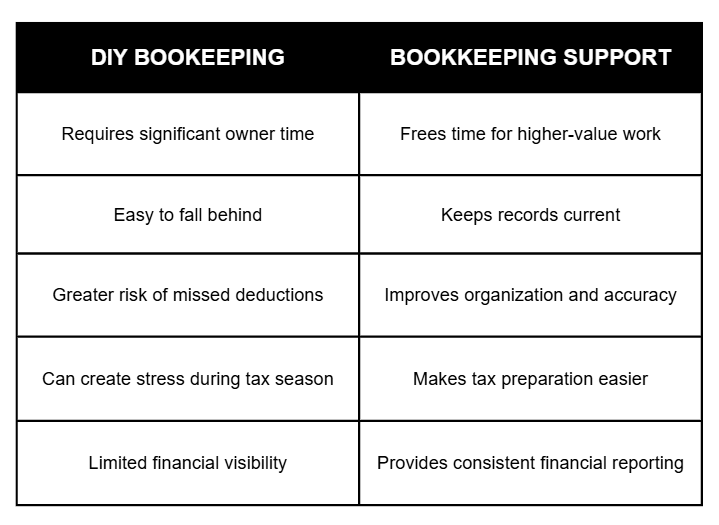
DIY Bookkeeping vs Hiring Bookkeeping Support
Common Mistakes
1. Waiting Until Tax Season
Keeping records current throughout the year reduces stress and improves accuracy.
2. Mixing Personal and Business Spending
Separate accounts make bookkeeping cleaner and reduce confusion.
3. Ignoring Small Expenses
Small recurring costs often become significant over time.
4. Forgetting to Track Mileage
Without documentation, valuable deductions may be lost.
5. Looking Only at Revenue
Revenue doesn't tell you how much money you're actually keeping.
Focus on profitability, not just sales.
Frequently Asked Questions
Why is bookkeeping important for small businesses?
Bookkeeping gives business owners accurate financial information that supports better decision-making throughout the year. Instead of relying on estimates or bank balances, organized financial records show where money is coming from, where it's going, and how profitable the business actually is. It also makes tax preparation significantly easier and helps identify opportunities to reduce unnecessary expenses.
What's the difference between revenue and profit?
Revenue is the total amount your business earns before expenses are deducted. Profit is what remains after paying business expenses. A business can generate substantial revenue while keeping very little profit if expenses are too high. That's why understanding both numbers is essential when evaluating business performance.
Why shouldn't I mix personal and business finances?
Keeping finances separate creates cleaner records, simplifies bookkeeping, and makes it easier to identify business expenses. It also reduces confusion during tax preparation and helps maintain clear financial reporting throughout the year.
How often should bookkeeping be updated?
Reviewing and updating bookkeeping monthly helps business owners stay informed, catch issues early, and avoid large backlogs before tax season. Regular reviews also make financial planning much easier.
Can bookkeeping help reduce taxes?
Bookkeeping itself doesn't reduce taxes, but accurate records help ensure eligible deductions aren't overlooked. Organized financial information also allows business owners and tax professionals to plan more effectively.
What is subscription creep?
Subscription creep happens when businesses continue paying for software, memberships, or services they no longer use. These small recurring expenses can quietly reduce profitability over time if they aren't reviewed regularly.
Should I track business mileage?
Yes. If business mileage qualifies as a deductible expense, maintaining accurate records helps support your documentation and makes it easier to claim legitimate deductions during tax preparation.
When should I consider outsourcing bookkeeping?
Many business owners choose to outsource bookkeeping when keeping financial records starts taking time away from serving clients, growing the business, or focusing on strategic work. Having bookkeeping support can improve consistency while giving owners more time to focus on higher-value activities.
Questions This Article Answers
What is bookkeeping?
Why is bookkeeping important?
How does bookkeeping improve profitability?
What bookkeeping mistakes do small businesses make?
Why shouldn't I mix business and personal finances?
How can bookkeeping help reduce taxes?
What tax deductions do small businesses often miss?
What is subscription creep?
How often should bookkeeping be updated?
Should I outsource bookkeeping?
How does bookkeeping help business growth?
What's the difference between revenue and profit?
How do I prepare for tax season?
Why should I review my subscriptions?
How can bookkeeping improve cash flow?
Conclusion
Bookkeeping isn't just about staying organized for tax season.
It's one of the most valuable tools you have for building a stronger, more profitable business.
When you know where your money is going, you can identify unnecessary expenses, avoid missing deductions, prepare for future growth, and make better financial decisions with confidence.
You don't have to do the bookkeeping yourself. But you do need accurate, up-to-date financial information so you can lead your business strategically.
The more visibility you have into your finances, the more control you'll have over your
Key Takeaways
Bookkeeping provides the financial information needed to make confident business decisions.
Poor financial organization often leads to missed tax deductions and unnecessary expenses.
Separating business and personal finances protects both your business and your records.
Reviewing your finances regularly helps you identify profit leaks before they become major problems.
Consistent bookkeeping makes tax season significantly less stressful.