

Why Profitable Businesses Track Their Finances Every Month
Most struggling businesses don't fail because the owner lacks talent.
They struggle because the owner doesn't have clear financial visibility.
It rarely happens overnight. Instead, it happens gradually through inconsistent bookkeeping, emotional spending, ignored financial reports, and avoiding difficult money conversations.
Over time, these habits create a business that's busy but not profitable.
The good news is that the opposite is also true.
When you consistently track your finances, you make better decisions. You gain confidence. You spot problems earlier. And you build a business that supports both your goals and your life.
Here's why financial clarity is one of the biggest advantages a business owner can have.

Why Financial Problems Usually Start Small
Most entrepreneurs don't intentionally ignore their finances.
They're simply busy.
Launching a business often means paying for websites, software, branding, marketing, and countless other startup expenses. It's easy to focus on getting customers while putting bookkeeping on the back burner.
Unfortunately, bad financial habits grow with the business.
As revenue increases, so do transactions, expenses, subscriptions, and responsibilities. If financial systems weren't built early, catching up becomes increasingly overwhelming.
That's why the best time to build healthy financial habits is from the very beginning.
Revenue Doesn't Equal Profit
One of the biggest misconceptions in business is equating revenue with success.
You may hear someone say:
"We're a six-figure business."
"We hit half a million in revenue."
"We're a seven-figure company."
Those numbers sound impressive.
But they don't tell the whole story.
A business can generate significant revenue while leaving the owner with very little personal income if expenses consume most of what's coming in.
What Is Profit Margin?
A profit margin is the percentage of revenue your business keeps after paying expenses.
Higher profit margins generally mean your business is operating more efficiently and keeping more of what it earns.
Focusing on profit instead of revenue gives you a much clearer picture of financial health.
Why Your Bank Balance Doesn't Tell the Whole Story
Many business owners make spending decisions based on one simple question:
"How much money is in my account?"
The problem is that your bank balance doesn't include future obligations.
It doesn't remind you about:
Software subscriptions
Payroll
Annual renewals
Insurance premiums
Upcoming bills
Taxes
Looking only at today's balance can create confidence that disappears when recurring expenses begin hitting your account.
Financial reports provide a much more accurate picture.
Treat Your Business Like a Business
Successful business owners don't simply hope everything works out.
They make intentional financial decisions.
That includes:
Opening a separate business bank account
Creating a startup budget
Tracking every expense
Reviewing financial reports regularly
Planning future spending before making purchases
Separating business and personal finances also creates cleaner bookkeeping and better financial visibility.
Why Every Purchase Should Have a Purpose
When financial reports aren't being reviewed regularly, every opportunity can feel like a smart investment.
A new software platform.
Another online course.
A marketing subscription.
A coaching program.
Without financial clarity, it's difficult to know whether those purchases are producing a return.
Ask Before Spending
Before investing in your business, consider asking:
Will this help generate revenue?
Will it improve profitability?
Will it save meaningful time?
Will I actually use it?
Can I measure its return on investment?
Intentional spending protects profit.
Bookkeeping Gives You Better Business Decisions
Many business owners think bookkeeping is about taxes.
In reality, bookkeeping provides the information needed to answer much bigger questions.
For example:
Should I raise my prices?
Can I afford to hire?
Which offer is most profitable?
What expenses should I eliminate?
Am I paying myself enough?
Can I invest in growth?
Without organized financial records, those decisions become educated guesses.
With accurate bookkeeping, they become strategic choices.
Why Financial Avoidance Hurts Confidence
Many entrepreneurs struggle with imposter syndrome.
Sometimes the problem isn't external.
It's internal.
When you know there are areas of your business you've been avoiding—whether it's bookkeeping, follow-up systems, or financial planning—that avoidance slowly erodes confidence.
Taking action, even imperfectly, often creates far more confidence than waiting until everything feels comfortable.

Money Is Information, Not Something to Fear
Many people grow up believing money is uncomfortable to discuss.
That mindset often follows entrepreneurs into business.
But avoiding finances doesn't eliminate financial problems.
It simply delays them.
Money isn't something to fear.
It's information.
Financial reports tell you:
What's working
What's not
Where you're losing profit
Where opportunities exist
The more often you review that information, the more confident your decisions become.
Financial Clarity Helps You Make Better Choices
When business owners understand their numbers, they often discover opportunities like:
Increasing prices
Eliminating unprofitable services
Canceling unnecessary subscriptions
Reducing operating costs
Building cash reserves
Hiring additional support
These aren't emotional decisions.
They're informed decisions backed by data.
Tax Planning Starts Long Before Tax Season
Waiting until tax season limits your options.
Keeping your books updated throughout the year gives you time to discuss potential strategies with your CPA before filing deadlines arrive.
Depending on your situation, conversations may include topics such as:
Retirement contributions
Business deductions
Tax planning opportunities
Business structure
Other legally available tax strategies
Planning ahead often leads to better outcomes than scrambling to organize records at the last minute.
Why Support Can Change Everything
Most business owners didn't start their company because they love bookkeeping.
They started because they're good at helping people.
That's why building support matters.
A bookkeeping professional can help:
Keep records current
Prepare financial reports
Organize transactions
Answer bookkeeping questions
Help you understand what your reports mean
Having support doesn't remove you from your finances.
It gives you better information so you can lead your business more effectively.
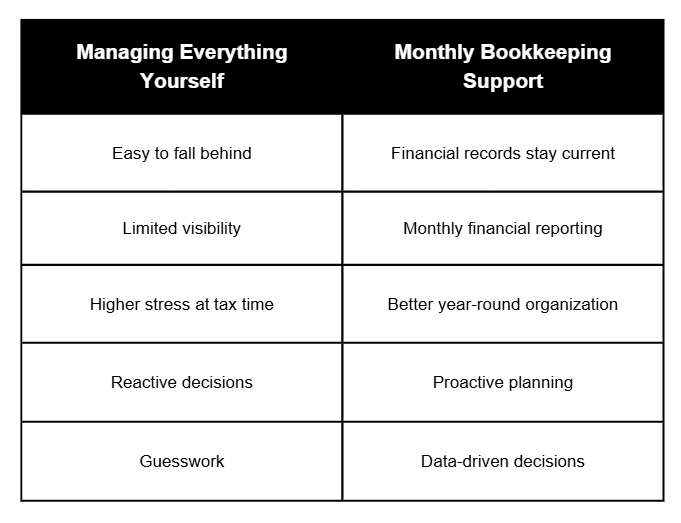
DIY Financial Management vs Monthly Bookkeeping Support
Common Mistakes
1. Measuring Success by Revenue Alone
Revenue matters, but profitability determines long-term success.
2. Looking Only at Your Bank Balance
Current cash doesn't reflect future obligations.
3. Mixing Personal and Business Finances
Separate accounts create cleaner records and better decision-making.
4. Delaying Bookkeeping
The longer bookkeeping is postponed, the harder it becomes to catch up.
5. Avoiding Financial Reports
Ignoring your numbers doesn't improve them.
Reviewing them gives you the opportunity to make changes.
6. Making Emotional Spending Decisions
Every investment should support a business goal, improve efficiency, or increase profitability.
Frequently Asked Questions
Why should I review my business finances every month?
Monthly financial reviews help you identify trends before they become problems. Reviewing your reports regularly allows you to monitor profitability, cash flow, expenses, and overall business performance so you can make informed decisions instead of reacting after problems occur.
Why isn't my bank balance enough?
Your bank account only shows today's available cash. It doesn't account for future bills, taxes, subscriptions, payroll, or recurring expenses. Financial reports provide a much more complete picture of your business.
What's the difference between revenue and profit?
Revenue is the total money your business earns. Profit is what remains after paying expenses. A business can generate substantial revenue while producing very little actual income for the owner.
How does bookkeeping improve profitability?
Bookkeeping helps identify unnecessary expenses, monitor cash flow, track profitability, and provide accurate financial reports. Those insights help business owners make better pricing, hiring, and spending decisions.
Why do entrepreneurs avoid bookkeeping?
Many business owners find finances intimidating or simply prioritize client work over administrative tasks. Unfortunately, avoiding bookkeeping usually increases stress over time instead of reducing it.
How can bookkeeping improve confidence?
Knowing exactly where your business stands financially reduces uncertainty. Instead of wondering whether you can afford certain decisions, you have accurate information to guide your choices.
When should I start tracking finances?
Immediately. Whether your business is brand new or already established, building consistent financial habits today will make future decisions much easier.
Is hiring bookkeeping support worth it?
For many business owners, outsourcing bookkeeping frees up valuable time while providing organized financial records and regular reporting. It also allows owners to focus on serving clients and growing the business.
Questions This Article Answers
Why should I track my business finances?
Why is bookkeeping important?
What's the difference between revenue and profit?
How often should I review my financial reports?
Why shouldn't I rely on my bank balance?
How do profitable businesses make financial decisions?
Why do entrepreneurs avoid bookkeeping?
How can bookkeeping improve confidence?
When should I hire a bookkeeper?
How do I improve my profit margin?
Why should I separate business and personal finances?
How can financial clarity help my business grow?
What financial reports should I review?
How does bookkeeping reduce stress?
How can I build a healthier business financially?
Conclusion
Building a profitable business isn't just about bringing in more revenue.
It's about understanding where your money goes, making intentional decisions, and creating habits that support long-term growth.
Financial clarity gives you the confidence to raise prices when needed, eliminate unnecessary expenses, invest wisely, and prepare for future opportunities.
You don't have to love bookkeeping.
But you do need accurate financial information to lead your business well.
When you treat your finances as a strategic part of your business instead of something to avoid, you put yourself in a much stronger position to grow both your profit and your peace of mind.
Key Takeaways
Revenue alone doesn't determine whether your business is successful. Profit matters more.
Monthly financial reviews help you make smarter business decisions.
Looking only at your bank balance can create a false sense of security.
Bookkeeping provides the information you need to price, hire, and grow confidently.
Financial clarity reduces stress and increases confidence as a business owner.